Recommended Post

Mittwoch, 28. November 2018

Literary allusion: The White House at Dunsinane Hill

Excellent example of literary allusion:


"Birnam Wood arrived early" in Shakespeare Magazine's tweet refers to the prophecy made by the three witches in Macbeth

In Shakespeare's play Macbeth, Macbeth is told that he will only be defeated when Birnam Wood comes to Dunsinane Hill (where his castle is). Later, his enemy's army comes through Birnam Wood and each soldier cuts a large branch to hide himself, so that when the army moves on it looks as if the wood is moving. Macbeth is defeated and killed. (1)

The picture in the tweet shows this year's Christmas decorations at the White House (2018), with the First Lady, Melania Trump, admiring it.

Of course, the parallel drawn (indirectly) between President Trump and Macbeth is wildly exaggerated and utterly inappropriate. But the tweet above is not to be taken literally and is obviously intended as a tongue-in-cheek comment on the style of the decorations. ______________
(1) short description taken from ldoceonline - thank you.

Donnerstag, 8. November 2018

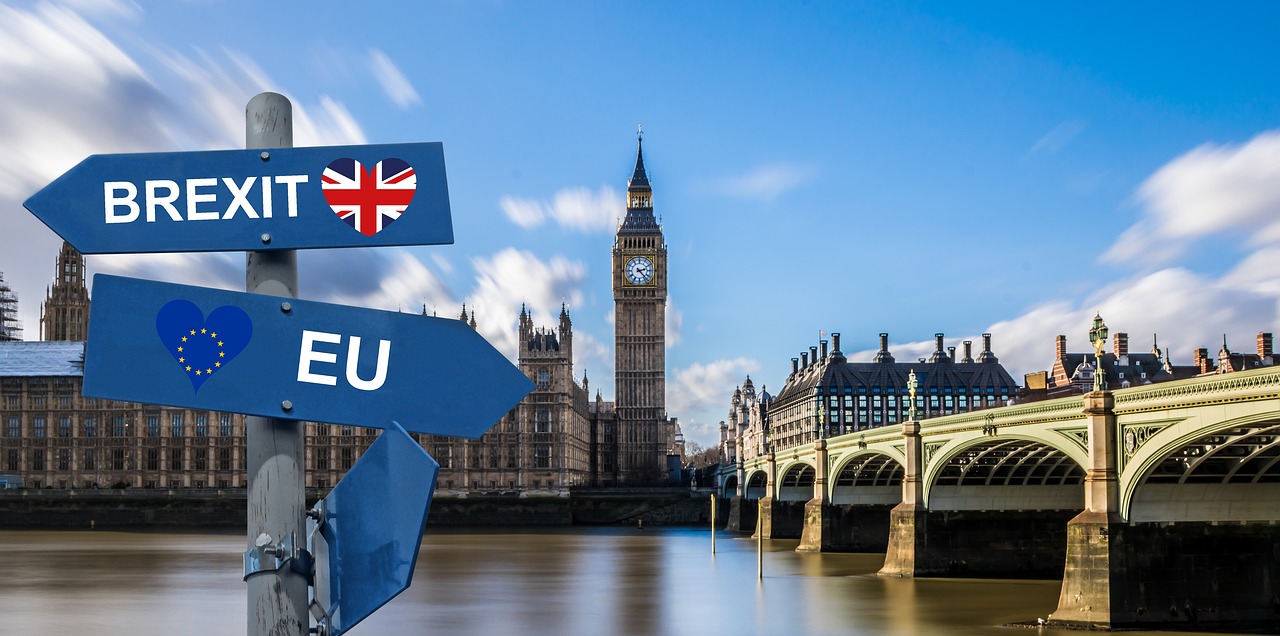
Brexit ... getting closer

Credits: pixabay.com

The Spectator of this week has a feature on the current status of the Brexit process, or rather on the state of discussions about how it can and should proceed. Have a look here:

Brexit is served

Please note the pun here: The headline is an allusion to the phrase "dinner is served", a German equivalent of something like „Es ist angerichtet“ - which would be a nicely ambiguous German expression as well in this context (in addition to the food context, it might be interpreted as „Der Schaden ist angerichtet“). In this light, have a good look at the caricature, too.

What the British government is ignoring, is rising support for the demand of a second referendum, this time on the conditions of Britain leaving the EU.

UK's top lawyers urge Theresa May to back second Brexit vote

On the other hand, many people think there will never be a second referendum:

Why a second Brexit referendum is unlikely

Donnerstag, 5. April 2018

Nationalism - a thing of the past

In his article in The Guardian, Rana Dasgupta claims that nation states will not survive - and it would be best if we got over that rather quickly. However, there are a couple of developments that are going to take more or less the rest of this century, until humanity will have arrived at new concepts that fit the modern situation.

This is the beginning of Dasgupta's text:

What is happening to national politics? Every day in the US, events further exceed the imaginations of absurdist novelists and comedians; politics in the UK still shows few signs of recovery after the “national nervous breakdown” of Brexit. France “narrowly escaped a heart attack” in last year’s elections, but the country’s leading daily feels this has done little to alter the “accelerated decomposition” of the political system. In neighbouring Spain, El País goes so far as to say that “the rule of law, the democratic system and even the market economy are in doubt”; in Italy, “the collapse of the establishment” in the March elections has even brought talk of a “barbarian arrival”, as if Rome were falling once again. In Germany, meanwhile, neo-fascists are preparing to take up their role as official opposition, introducing anxious volatility into the bastion of European stability.
But the convulsions in national politics are not confined to the west. Exhaustion, hopelessness, the dwindling effectiveness of old ways: these are the themes of politics all across the world. This is why energetic authoritarian “solutions” are currently so popular: distraction by war (Russia, Turkey); ethno-religious “purification” (India, Hungary, Myanmar); the magnification of presidential powers and the corresponding abandonment of civil rights and the rule of law (China, Rwanda, Venezuela, Thailand, the Philippines and many more).
What is the relationship between these various upheavals?

Read on here:

Rana Dasgupta, "The demise of the nation state", The Guardian (5 Apr 2018)

What do you think? Is he right? Or will nation states still exist in the next century, too? What factors will matter most for how things will develop?
Share your opinion here or at the mebis forum.

Sonntag, 1. April 2018

Happy Easter

Happy Easter everyone!

If you feel like doing some light reading today, here's a story vaguely connected to the occasion:

"Here's Why Easter Eggs Are a Thing: The Origins of Easter Day's Eggs" (TIME Magazine, 29 March 2018)

And it also comes with a video, too:

Samstag, 3. März 2018

What girls are made of

Advertisements are an important part of "The Media", because in no other way could firms draw people's attention to their products and portray their products' qualities as attractively as possible.

Almost from the beginning of advertising, in the late 19th and early 20th century, advertisements have tried to convince the public that the product is not only useful, trustworthy and aesthetically pleasing, but that it enables the consumers to be different, to be stronger, more beautiful versions of themselves, if only they buy and use the company's product.

Here we have a very clever ad by the sportswear firm Nike. They want to sell sports shoes, clothes, and other equipment. But above all, they want to be perceived as ... what? Write about the intentions behind this video clip and comment on it. You can make use of the text which the advertising firm added to the video (see below) and comment on that, too.

NIKE - WHAT ARE GIRLS MADE OF? from Vasco Vicente on Vimeo.

"Russian girls have always been under societal pressure. They are often told what characteristics they should be made of. The girls are expected to like and be like certain things. Unfortunately, this is often supported in culture.
Many years ago, a children’s song called “What are boys and girls made of” was released in USSR. It has since become a cultural milestone, a composition that every Russian boy and girl learn when they are young. In the lyrics of that song boys are made of things like “fireworks and energy batteries”, while girls are made of “rings, flowers and marmalade”. Up until this day, this song is used as an educational piece and is included in many Russian kindergarten and school programs.
In 2017 we decided to break stereotypes about what being a girl means by changing that song. Because Russian girls are made of more than just “flowers and marmalade”. They are made of bravery, self-dedication and dignity. They are made of freedom, confidence and independence. They are made of skill, accomplishments and achievements.
With every training, every morning run, every game, every single loss and victory, Russian girls build themselves.
Because they know - they are made of what they do."

Mittwoch, 28. Februar 2018

The World as 100 People

Although the concept is not really new - the details give us a fresh outlook on the state of our globe. One of the easy examples: Look at how many people speak what language. But there are lots of interesting (and disturbing) discoveries to be made (click on the graphic to enlarge it).

The World as 100 People

From Visually.

Samstag, 17. Februar 2018

Mister Feis

Find out about the meaning and message of this cartoon and comment on it. (You can ignore the comment by Ben Howe who posted it on Twitter; but you don't have to.)

Mittwoch, 24. Januar 2018

Job interview with a millennial

We talked about job interviews in today's lesson and also watched two examples (from the Context21 DVD).
Now this job interview is similar in some ways, but has a different focus. Describe the similarities and differences.


A Millennial job interview from @TheDanielBrea on Vimeo.

Mittwoch, 10. Januar 2018

Oprah Winfrey - a possible candidate for the US presidency?

You may have heard of Oprah Winfrey's speech at the Golden Globe Awards ceremony. Here is an article about it, focusing on what it may mean for the political landscape of the next few years.


Oprah Winfrey's Golden Globe speech inspires speculation ...

If you want to practice your listening skills, go to the PBS podcast site, where you can listen to full programs or segments of programs via iTunes.

PBS podcasts

In the picture: President Barack Obama awards the 2013 Presidential Medal of Freedom to Oprah Winfrey.


Source: 
https://obamawhitehouse.archives.gov/blog/2013/11/20/president-obama-honors-presidential-medal-freedom-recipients

Samstag, 30. Dezember 2017

Happy new year - and no worries

A Happy New Year to all of you. And if you remember the advice given in this videoclip - you should be able to forget about your worries. That is: IF you come to grips with the question "Can you do something about it?" if the answer is "yes". If you stop there (without doing anything about it), you should start worrying.
But have a look for yourselves. And: Happy New Year.

Montag, 11. Dezember 2017

St George and the Dragon

There is a fairly old painting by Paolo Uccello called "Saint George and the Dragon"; it was probably painted around 1470. The interesting thing about it - apart from the fact that it deserves a second and a third look - is that it has inspired a number of poets to write a poem about it.

The most famous of these poems is "Not My Best Side" by U A. Fanthorpe. But here is the picture:


By Paolo Uccello - The Yorck Project: 10.000 Meisterwerke der Malerei. DVD-ROM, 2002. ISBN 3936122202. Distributed by DIRECTMEDIA Publishing GmbH., Public Domain, https://commons.wikimedia.org/w/index.php?curid=159874


And here is the poem:
UA Fanthorpe, "Not My Best Side"


If you'd like to hear it read - here's a recording (American English):


For more information about the poet, read her obituary in the Guardian (2009):


_________________________________________________

And finally, another interesting link:


Dienstag, 5. Dezember 2017

Hour of Code

It's the #HourOfCode this week. In our age of digitisation, knowing at least some basic things about computer programming has become a cultural technique that everyone should have acquired at some point.

One of the basic rules is: Computing proceeds step by step, and in order to save time, repetitive steps can be designed as loops - you can tell the computer to do certain steps again and again, until a certain condition is fulfilled (either a certain number of runs has been completed, or the computer runs out of data, or it has found what it was supposed to look for).

In today's Google Doodle, you can practice computer programming in a very easy way. By clicking symbols, you can combine certain steps and even loops to guide a little bunny towards all the tasty carrots. Try it, and have fun!

"Coding for Carrots:" 50 years of kids coding (a Google doodle)

Actually, it's a 50-year anniversary:

Kids Coding Languages (time.com)

Below you can see my results: I started out all right, but later I didn't reach the optimal solutions. Oh well, at least my bunny got its carrots in the end. ;-)


Dienstag, 7. November 2017

POETRY! ... or: poetry

Here are some sites where you can find great poems for our poetry book project.


Have a look at all of them, please. Maybe you'll like the third one better than the first one. Or the other way round. But who knows ... :-)

1 Poetry Daily

2 The Top 40 poems at "American Poems"

3 The "Poem of the Day" at "American Poems"

4 The Poetry Archive

5 "Freedom Poems" (National Poetry Day 2017)

6 The Favourite Poem Project

7 Poem of the month


Have you ever thought about what poetry is for? Here you can see how poets react when this question is put to them.  -->  What is poetry for?


Sonntag, 5. November 2017

The 6 C's for the 21st century

Somebody with the username "smarterteacher" has published an infographic called "The 6 C's of
Education for the 21st Century". You can access the whole think here, and if you scroll down you'll get a short text on each of the C's:

The 6 C's of Education for the 21st Century


The 6 C's are:

  1. Think critically
  2. Communicate clearly
  3. Work collaboratively
  4. Embrace culture
  5. Develop creativity
  6. Utilize connectivity
Are you getting enough "c" training at school? What could we do to improve the current situation?

Donnerstag, 2. November 2017

School makes students stupid?

Watch the following short interview (in German) with Prof. Ulrich Weinberg at the website of DIE ZEIT:

"Verblödet die Schule unsere Kinder?"

Have a look at the comments, too. What is your comment? Give me your opinion on this topic, please.

Ulrich Weinberg is Head of the "HPI School of Design Thinking" at the University of Potsdam.

The School of Design Thinking at the Hasso-Plattner-Institute began its program in the winter term of 2007/2008. Under the directorship of Prof. Ulrich Weinberg this unique complementary program in Design Thinking (inventive development) is the first of its kind at a German university. Modelled on the famous d.school at Stanford University in California (US), the one-year program in Design Thinking will enable students to develop particularly user-friendly IT-based products and services in multidisciplinary teams.

The truly revolutionary aspect of the concept of Design Thinking is that both the three to four students in each team as well as their professors all come from different academic disciplines. Teams of computer scientists and usability experts, designers and management specialists, biologists, sociologists, and medical doctors work towards innovative solutions and the development of prototypes.     

Students from practically all disciplines, who are in the final phase of their M.A.-level university studies, are eligible to apply for this supplementary training in Design Thinking in Potsdam. The course starts annually in the fall.

Montag, 30. Oktober 2017

A global TV hit ... produced in Germany?

The most recent edition of the Economist (24th Oct. 2017) has a lot of positive things to say about "Babylon Berlin", a TV series set at the end of the "Roaring Twenties" in Berlin (ca. 1929):
“Babylon Berlin” could be the next big German export
“Babylon Berlin” is not only Germany’s most expensive television series but also its most impressive. Dynamic, thrilling plots and moody soundtracks capture the zeitgeist of the Roaring Twenties and of today. With such resonant and engaging material, a skilful creative team at the helm and distribution in at least 60 countries, “Babylon Berlin” has the potential to be the next global television hit. 

What do you think? Have you had a chance to see an instalment of this series (on Sky Deutschland)? Were you impressed? If you haven't seen any of it yet, would the Economist article make you curious? Give reasons why you would like to see this series - or why you wouldn't.

The series is based on novels by Volker Kutscher, and it is named after their protagonist, police officer Gereon Rath (the Gereon Rath novels). The title of the first novel is Der nasse Fisch (The wet fish). 
The novel has already been translated into English, and the title of the first book was changed into "Babylon Berlin". Have a look at the publisher's website, Kiepenheuer & Witsch - you'll find a sample both in the German original and in the English translation (PDF).


Here is a German trailer, and below there's an English one. What are the differences?


Freitag, 20. Oktober 2017

Youngest female Prime Minister in New Zealand: Jacinda Ardern

Look at the new head of the New Zealand government: Jacinda Ardern, who has become New Zealand’s youngest prime minister, 26 days after the country went to the polls.

You haven't heard so much about politics in New Zealand, have you? What do you associate with NZ at all? Tell me about it.

And what do you think of Jacinda Ardern's becoming prime minister? Find out more about her as a person and as a politician.

Montag, 16. Oktober 2017

Margaret Atwood: Peace Prize of the German Book Trade

Canadian novelist Margaret Atwood (author of, among other books, The Handmaid's Tale) has been awarded the Peace Prize of the German Book Trade 2017.

You can read her acceptance speech, given on 15th Oct. 2017 at Paulskirche, Frankfurt, in full at the site of the "Friedenspreis". If you would like to get a little excerpt, look here:

The citizens of every country must ask themselves the same question: what sort of world do they want to live in? Being of a Plutonian and sinister cast of mind, I would reduce that sentence to: Do they want to live? Because, drawing back from our human picture – drawing back so that the borders between countries disappear, and the earth becomes a blue marble in space, with much more water on it than land – it is evident that our fate as a species will be determined by whether or not we kill the oceans. If the oceans die, so will we – at least 60 percent of our oxygen comes from marine algaes.

But I will try not to depress you too much. There is hope, there is hope: brilliant minds are already at work on such problems. But meanwhile, what is an artist to do? Why make art at all, in such disturbing times? What is art, anyway? Why should we be bothered with it? What is it for? Learning, teaching, expressing ourselves, describing reality, entertaining us, enacting truth, celebrating, or even denouncing and cursing? There’s no general answer. Human beings have engaged in the arts – music, visual imagery, dramatic performances – including rituals – and language arts, including tale telling – ever since they have been recognizably human. Children respond to language and music before they themselves can speak: those capabilities seem to be built in. The art we make is specific to the culture that makes it – to its location, to its driving energy system, to its climate and food sources, and to the beliefs connected with all of these. But we have never not made art.


Below, you can watch a seven-minute TV report on the new film version of The Handmaid's Tale produced by Hulu in 2017, including interview passages with author Margaret Atwood and the Hulu version's protagonist, Elizabeth Moss.

Samstag, 7. Oktober 2017

Guns in the U.S.

Your task: Comment on the material linked to at this page (some or all), give your own opinion on gun ownership and consolidate it with arguments and examples. - Alternatively, you can find (and link in the comments) your own example of how someone deals with this topic in a creative way (song, novel, movie) and comment on it.

We've all heard of and read about the Las Vegas massacre.

We also know - from experience - that there probably won't be any changes to gun legislation in the U.S. - The N.R.A. (National Rifle Association) is an extremely powerful lobby group for gun owners and gun fanatics of all kind. They base their conviction that all Americans have a right to possess guns on the Second Amendment, which is an addition to the U.S. Constitution passed in 1791 (three years after the original version of the constitution was ratified). What the Second Amendment in fact means is still being disputed today (cf. discussion of the 2nd Amendment here), and many liberals are convinced that it should be changed or abolished (cf. Bret Stephens's opinion article here).

Here there's a slam poet giving us his view on the passivity of Congress on this matter:


 If you still have some ten minutes to spare, have a look at what Jimmy Kimmel has to say about what happened in Las Vegas. Kimmel is a comedian - exceptional in his bipartisan approach; he usually does not only make jokes about Republicans or Democrats, but is critical of both sides of the political spectrum.
If you have become really interested in the topic now, you may want to read this article in Süddeutsche Zeitung (7 Oct. 2017), which examines the historical roots of (gun-) violence in the United States and comes up with an assessment that is not at all reassuring: "So brauch ich Gewalt" by Hubert Wetzel.

Samstag, 23. September 2017

21st century skills - defined by Sir Ken Robinson

Listen carefully to what Sir Ken Robinson tells interviewer Ross Hall about the competencies required in the 21st century. Then think about the question whether your school helps you acquire those competencies. If it doesn't - what can you do about it? How can you influence your teachers, your school administration to provide what you need? What can you do yourself to develop those competencies?